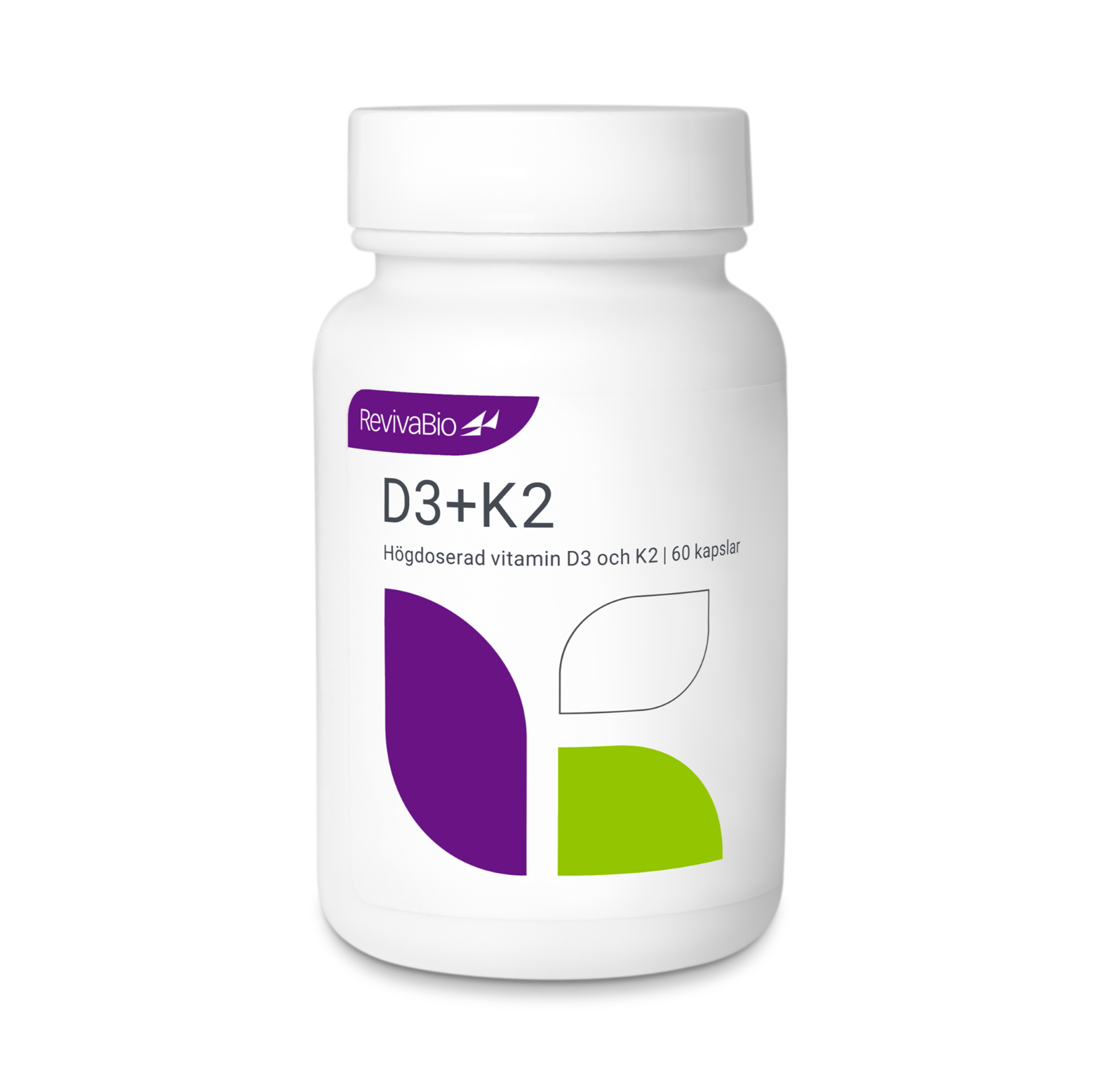
RevivaBio D3+K2 60 kapslar
73,92 SEK
Description
Vitamin D
D3 is the most easily absorbed form of vitamin D. Vitamin D is found naturally in the diet to a lesser extent, but it is primarily formed in the skin through the UVB radiation you are exposed to when you are in the sun. However, the sun needs to be at an angle of at least 45 degrees for the skin to be able to form vitamin D. This occurs in Sweden during the period between late spring and midsummer.
The half-life of vitamin D in the body is approximately between 2-3 weeks, depending on individual conditions and the type of vitamin D involved. This means that if you were not to supply vitamin D through your diet, the amount of vitamin D you have in your body during the winter months could be halved within 3 weeks.
In our latitudes, almost everyone needs to supplement with extra vitamin D during the dark period of the year.
Vitamin D is a fat-soluble vitamin that contributes to the normal function of the immune system. It also plays a role in the process of cell division. In addition, vitamin D helps us maintain normal bones and teeth. This is due, among other things, to the fact that it contributes to the normal absorption and utilization of calcium and phosphorus. Vitamin D also contributes to normal levels of calcium in the blood. R
Vitamin K
Vitamin K contributes to normal blood clotting and is also important for a normal skeleton, that is, our bone density. R In humans, intestinal bacteria produce vitamin K2 (menaquinones), but not in sufficient quantities to meet the body's needs. Therefore, we need to supply it through the diet or as a dietary supplement, and vitamin K2 is found in fermented foods, algae, meat, liver, egg yolk and dairy products, among other things. R
K1 (phylloquinone) is found primarily in green leafy vegetables such as nettles, collard greens, fresh spinach, kale and other types of cabbage, as well as certain oils. Various factors affect the amount of vitamin K in foods. Of course, the type of raw material involved, but also the growing and storage conditions. R
- Fri frakt vid köp över 1999:-
- Maila oss, vi svarar snabbt!
- Mängdrabatt
Beskrivning
Content:
60 Capsules.
1 capsule contains:
200 µg vitamin K2 (200% of DRI*),
125 µg vitamin D3 (2500% of DRI*).
*)DRI = Daily Reference Intake
Ingredients:
Vitamin K2 (MK7), bulking agent (microcrystalline cellulose), vitamin D3 cholecalciferol, magnesium stearate. Capsule (bovine gelatin).
Recommended dose:
Take 1 capsule daily with a meal containing fat or oil in any form. Do not exceed the recommended dose. D3+K2 is a dietary supplement. Dietary supplements do not replace a balanced diet.
Please note that vitamin K may affect the effect of blood thinning medication. Consult a doctor/dietitian if both products are used at the same time.